Equity can mean different things depending on the context of its use. Even in the investment space, the definition of equity has different meanings depending on the perspective of the user.
What is Equity?
An asset must be financed by a combination of equity and debt. Debt is straightforward as the amount borrowed with obligation to pay back in the future with interest. Equity is the Shareholders capital contribution to the company but the value of the same equity can be seen differently either from the accounting perspective or the markets perspective.
Equity meaning in Accounting
First is an accounting definition which is the book value of equity on the company balance sheet comprised of the initial shareholder contribution and retained earnings (excluding dividends paid).
How Share Market value Equity
The second is its market value equity or market capitalization which is how much investor value the equity in the company today based on the following formula:
Price Per Share x Total Shares Outstanding
The value of equity defined in accounting or market terms can vary considerably. Book value equity is the actual contribution of shareholders in the company. While the market value of equity is the value of the company equity that is traded on the stock exchange which can deviate significantly from the book value. In most instances the market value of equity can be a multiple of book value.
What cause changes to equity value?
Depending on the market sentiment on the particular stock, the up and downs of investment sentiment can result in the shares trading above or below book value.
Equity on the Balance Sheet
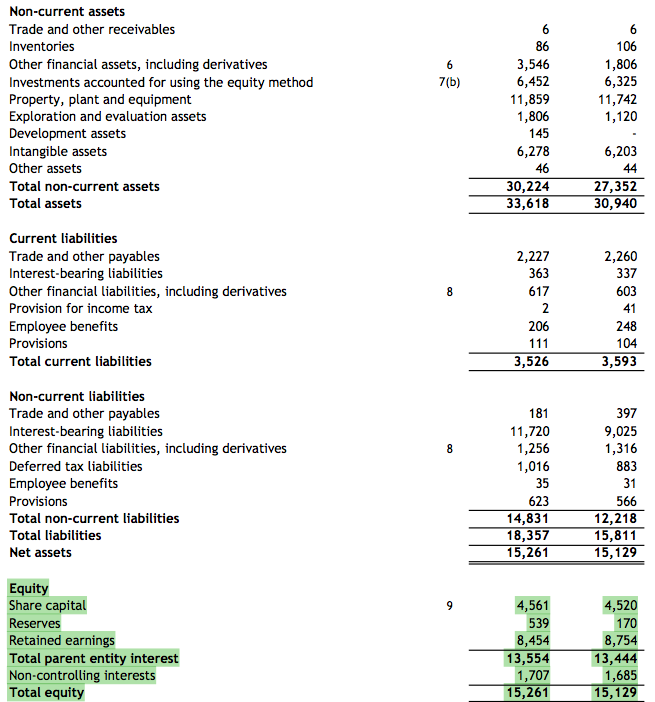
Accounting balance sheet definition is:
Asset = Liability + Equity.
Balance sheet example above shows the business was originally half financed by debt and remaining by shareholder equity. Retained earnings are profits which are not paid out as dividends.
Why would investors bid up the stock price above book value?
The Market value of equity can be a multiple of the book value because investors believes the management will continue to create value and return of the capital above the investor hurdle rates. Therefore they are willing to bid up the price of the stock until it is at level of their own cost of capital.
The subsequent market value of the equity is based on the future performance of the company where shareholder keeps all the value above interest and debt payments. Hence the former accounting definition is in a historical context while the latter sees the concept on a forward looking basis.
Owners Equity Definition: Book Value vs Market Value
Company can be listed on the stock exchange and grow overtime. For example ASX20 is an index with 20 largest companies on the ASX (or the S&P 500 in the international context) and the total value of companies is important metric as it can mean whether the company is included in index funds and ETF trackers.
Companies always want a higher price due to its self interest as management compensation linked to stock prices or more importantly, a higher relative price lowers its cost of capital so it can fund its growth further at a cheaper rate.
Equity analysis is finding the value of the company based on a set of assumptions. The result is that there is no good or bad assets, only good or bad prices in purchasing the said assets.
What does Equity mean in investing?
If the baseline of the equity value can be calculated differently then it will have implication on how the returns are calculated as well.
Return on Equity (ROE)
An important way of setting equity value is looking at the expected return over a set timeframe. After all owning shares in a company is a claim on future shareholder free cash flow.
Book Value ROE = Net Profit / Equity Value on the Balance Sheet
Simple definition is the Net Profit divided by capital contributed. Dividends are paid as percentage of the net profit and returned to its shareholders. In addition, Australian company dividends includes franking credits which are created when taxes are paid on earnings based in Australia.
Market ROE = Net Profit / Market Capitalization
From market’s view, if you bought the share at market price rather than the book value then the return on equity is based on the net profit divided by the market capitalization value.
These two formulas are critical in comparing return and company performance as the end result can vary widely depending on how much the shares trade above the book value.
Return on Equity Adjustment
Given formula for ROE above, market value equity can also be calculated if the book value return is known. This is simply:
Book value ROE x price to book ratio.
Equity Multiplier
There are a number of metrics investors can use in evaluating the equity financing structure of a company. One of the easiest way is the equity multiple. This is simply the asset value divided by either book value of equity or the market capitalization.
Advantage of using equity multiplier is that is a quick means of looking at the financing structure. Analysis can done on the next level include using discounted cash flow analysis layered on top to see how much additional capacity it can handle, or dividends the company can afford to pay.